Scared to Book Your First Yoga Retreat? Here's What's Actually True
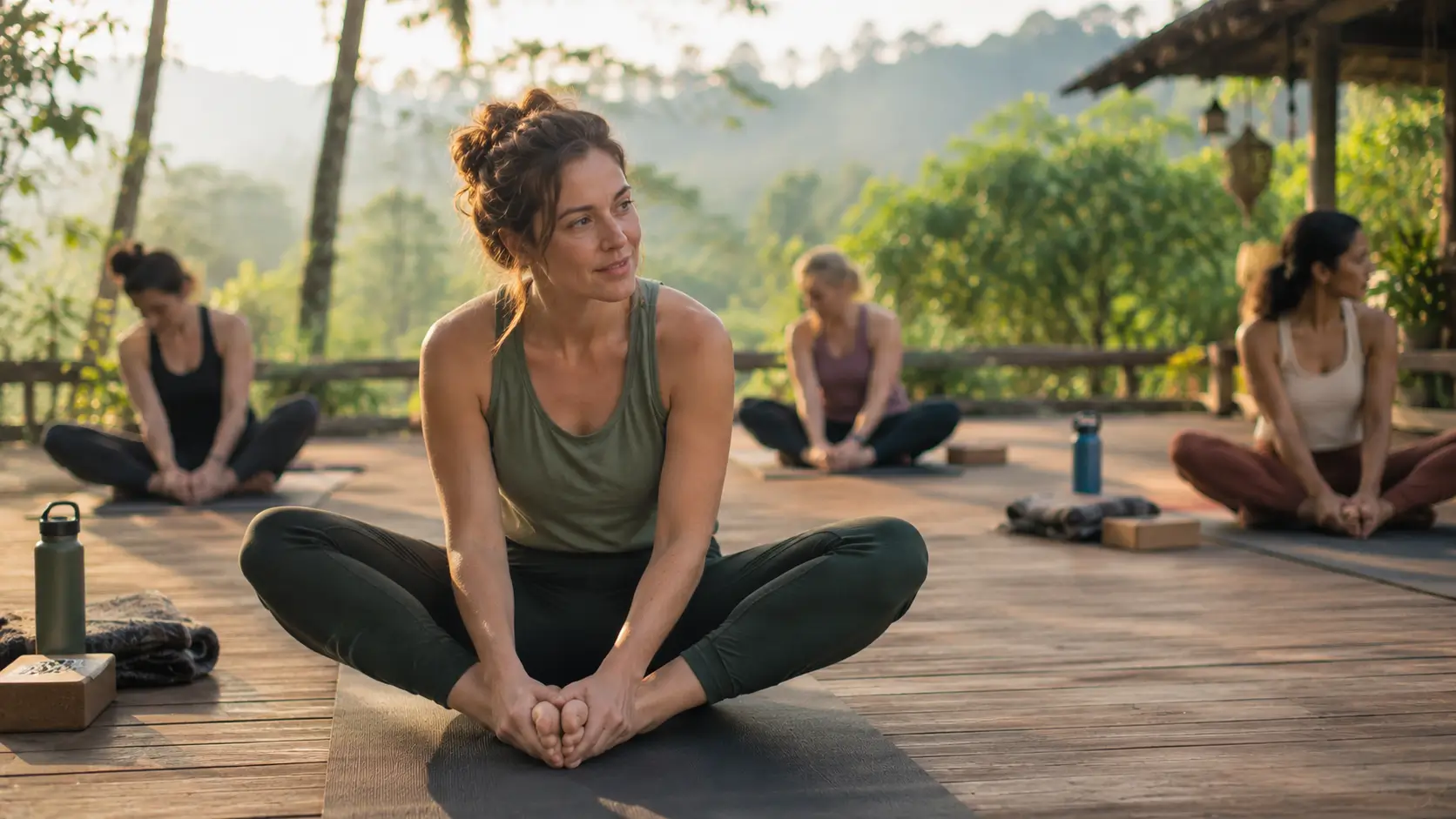
The version of you that's already burned out doesn't want another thing to fail at. Here's what a first yoga retreat actually involves, including the nerves nobody mentions, and whether it's really built for beginners or just says it is.
In this Yoga article, I've tried to explain all the real questions regarding Yoga retreats. Before I explain this blog, you have to understand this first…
Do You Need Yoga Experience to Attend a Retreat?
No. This is the single most common thing people get wrong before booking their first one. A yoga retreat built for burnout recovery isn't a fitness test, it's structured around rest and nervous system recovery, and yoga is one tool among several, not a skill you're being graded on.
Most retreats in this category are explicitly built for beginners and experienced practitioners alike. The Butterfly Effect in North Bali is one example, no prior yoga experience is required, and sessions are optional and paced by the facilitator, meaning you can modify, rest, or sit out entirely without it changing anything about your experience there.
What Should You Actually Expect at Your First Yoga Retreat?
Less structure than you'd think, and a slower pace than a typical vacation. Most days include one or two guided sessions, morning movement, maybe an evening practice, with long stretches of unstructured time in between. Meals are usually shared, but attendance isn't mandatory. Nobody is tracking who shows up to which session.
The biggest surprise for most first-timers isn't the yoga itself, it's how much of the day is just quiet. If your image of a retreat is a packed itinerary, the reality is closer to the opposite. What actually helps burnout recovery last goes deeper into why this slower structure matters more than people expect.
Is It Normal to Feel Anxious Before a Retreat?
Yes, and there's real research behind why. Psychologists call this anticipatory anxiety, and according to the American Psychological Association, it's a well-documented, common response to uncertainty about a future event, not a sign that something is wrong or that you shouldn't go. Research specifically shows people feel more anxious when an outcome is unknown, even when the likely outcome is actually positive.
That means the nervousness you feel booking your first retreat isn't your gut warning you off. It's your brain reacting to not knowing yet what the experience will be like, which resolves itself the moment you're actually there and the unknown becomes known.
Will You Fit In If You've Never Done Anything Like This?
This worry is almost universal, and almost always wrong in practice. Most people at a retreat built for burnout recovery are there for the exact same reason you are, they're depleted, unsure, and looking for something rest alone hasn't fixed. Retreat groups skew heavily toward first-timers, not seasoned wellness veterans.
At The Embodied Woman in Tulum, Mexico, this is stated outright: "You do not need to arrive confident, certain, spiritual or experienced." That's not just reassuring language, it reflects who actually books these retreats. Browse the full burnout recovery category to see more retreats built with this same first-timer reality in mind.
What Do You Actually Do All Day on a Yoga or Wellness Retreat?

A realistic day looks something like this:
Morning: gentle yoga or movement, optional
Breakfast, shared but not mandatory
Midday: free time, a hike, journaling, or simply resting
Afternoon: a workshop, breathwork, or nothing scheduled at all
Evening: shared dinner, sometimes a group circle or ceremony
Sleep, earlier than you're probably used to
The through-line is choice. Nothing on a well-built burnout retreat requires participation, and the schedule leaves real room for doing nothing, which for someone burned out is often the actual point.
Do You Need to Be Flexible or "Good" at Yoga?
No, and this comes up constantly enough that it's worth stating plainly: flexibility is not the goal, and nobody is evaluating your poses. Yoga at a burnout-focused retreat is typically restorative or gentle, closer to stretching and breath-led movement than an athletic class. Modifications are the norm, not the exception, and a facilitator worth trusting will offer them without being asked.
If a retreat's marketing emphasizes advanced poses or physical intensity, that's a signal it's built for a different audience than someone recovering from burnout, worth checking before booking rather than assuming every yoga retreat is the same.
Can You Go on a Yoga Retreat With Injuries or Health Conditions?
Often, yes, but this is the one area where disclosure matters more than optimism. According to the American Academy of Orthopaedic Surgeons, more than 34,000 yoga-related injuries were treated in US doctors' offices, clinics, and emergency rooms in 2019 alone, most involving overstretching or repetitive strain from unmodified poses. Their guidance is direct: discuss any known illness or injury with your instructor before the session, not after, so modifications can actually be offered.
Tell the retreat host about any injury, chronic condition, or physical limitation before you book. A retreat that takes this seriously will ask directly, offer modifications, and confirm what's realistic for your body specifically. One that doesn't ask at all is worth a second look before paying.
This applies beyond physical injuries too. For retreats involving anything beyond gentle movement, plant medicine work, intensive breathwork, or physically demanding excursions, real screening should exist and should be visible before you commit, not discovered during an intake call after you've already paid a deposit.
How Do You Prepare for Your First Retreat?
Less packing anxiety than you'd expect helps. A few things that actually matter:
Comfortable, breathable clothing for movement, nothing you need to worry about ruining
A journal, even if you don't think you'll use it
Layers, mornings and evenings run cooler than midday almost everywhere
Whatever helps you personally regulate, an eye mask, a specific tea, a favorite book
Low expectations for day one, most people spend the first day decompressing from travel, not having a breakthrough
Mentally, the most useful preparation is simply accepting that the nerves are normal and will fade once you arrive, not something to solve before you go.
Frequently asked
Can complete beginners attend a yoga retreat for burnout?
Yes. Most burnout-focused retreats are specifically designed for people with no prior yoga experience, with optional, facilitator-paced sessions rather than a fixed skill requirement
What if I don't like group activities at a retreat?
Most well-run retreats make group sessions optional, not mandatory. You can participate as much or as little as feels right, and unstructured personal time is usually built into every day.
Is retreat anxiety normal before you go?
Yes. Feeling nervous before a first retreat is a documented, common psychological response to uncertainty about a new experience, not a sign you've made the wrong choice.
How physically demanding is a yoga retreat for burnout?
Generally low. Sessions built for burnout recovery tend toward gentle, restorative movement rather than physically intense practice, with modifications offered as standard.
Can non-flexible people do yoga retreats?
Yes. Flexibility isn't the goal of yoga at a recovery-focused retreat, and modified poses are the norm. Most first-timers are far less flexible than they assume matters.