What to Do on a Solo Retreat: A Sample 3-Day Schedule You Can Copy
Most retreat schedules are built for meditation centers and fill every hour. This one is built for rest. Here is a three-day plan you can copy, with the morning and evening routines, meals, and what to do when day two gets strange.
A good three-day solo retreat gives every day three anchors, one for movement, one for reflection and one outdoors, with long open gaps between them. Day one is for arriving, day two is for deep rest, and day three is for closing and heading home. Plan less than you think you need. The schedule below is a template you can copy, along with the reasoning for each part, so you can change it to suit you.
If you haven't booked yet, start with our guide to planning your first solo wellness retreat for budget, dates and logistics.
How Should You Structure Each Day of a Solo Retreat?
Use the three-anchor rule. Each day gets one movement anchor, one reflection anchor and one outdoor anchor, plus meals and sleep. That's all. Everything else stays open on purpose.
Movement anchor: 20 to 30 minutes of gentle stretching, yoga or walking
Reflection anchor: 30 to 45 minutes of journaling or sitting quietly
Outdoor anchor: a walk with no destination, ideally near sunset
As a rule of thumb, keep planned activity to about three hours a day. That feels like too little, and that's the point. Karmê Chöling, a long-running Shambhala retreat center, advises first-time solitary retreatants to write a realistic schedule, noting that new retreatants often plan five or six hours of meditation a day and that unrealistic expectations can unravel a retreat. Even their sample schedule for first-timers builds in tea, aimless wandering and lights out at about nine.
What Does a Daily Schedule Template for a Solo Retreat Look Like?
Here is a 3-day template. Change the times to suit you, but keep the gaps.
Day 1: Arrive and settle | Day 2: Deep rest | Day 3: Close and head home | |
|---|---|---|---|
Morning | Travel. Arrive by mid-afternoon so you're in daylight. | Wake without an alarm. Tea at a window, no phone. 20 to 30 minutes of gentle movement. Late breakfast. | Movement and breakfast. Write your letter to yourself. |
Midday | Unpack and make the space yours. A simple lunch or snack. | Reflection anchor: 30 to 45 minutes of journaling or sitting quietly. Lunch. | Pack and tidy the space. One last walk. |
Afternoon | A short walk, no destination. Rest. | Open. Nap, read, wander, do nothing. | Leave in daylight. Keep tomorrow free. |
Evening | Early, simple dinner. Warm shower. A few lines in a journal. Lights out by 10. | Sunset walk. Dinner. Screens off 30 minutes before bed. | Home. Unpack lightly. Early night. |
What Should You Do on Day One of a Solo Retreat?
Do very little. Arrive in daylight, unpack, eat something simple and go to bed early. On the first morning, if you're already there, start slowly: drink water, sit outside for ten minutes and put your phone away until after breakfast. Don't make big decisions or start a long journaling session on day one. For a longer list of what to do on that first evening, see our section on the first night of a solo retreat.
What Should You Do on Day Two of a Solo Retreat?
Day two is the longest open stretch, and it's where most people struggle. Boredom, heavy sleep and sudden emotion often turn up here, because you've stopped moving fast enough to avoid them. Keep the three anchors, protect the open afternoon, and let the day be slow. If it feels too empty, lighten it instead of filling it.
What Do You Do When You Feel Bored on a Solo Retreat?
Treat boredom as a sign you've slowed down, not a sign the retreat is failing. Try this before you reach for your phone:
Wait twenty minutes. Boredom usually shifts if you sit through it.
Change rooms or go outside.
Pick one low-effort thing: a walk, tea, a paper book, a sketch.
If it's still heavy, add one gentle activity, but don't fill the whole day.
What Should You Do on the Last Day of a Solo Retreat?
Close it properly instead of rushing out. Pack the night before, and keep the morning calm. Write a short letter to yourself: what you noticed, what you want to keep, and one practice you'll do at home. Take one last walk, then travel in daylight if you can.
Keep the day after you return free of meetings. Research on habit formation suggests it takes weeks to months for a new behavior to stick, so our guide to extending the benefits of your retreat covers how to protect what you've started.
What Are Good Solo Retreat Morning Routine Ideas?
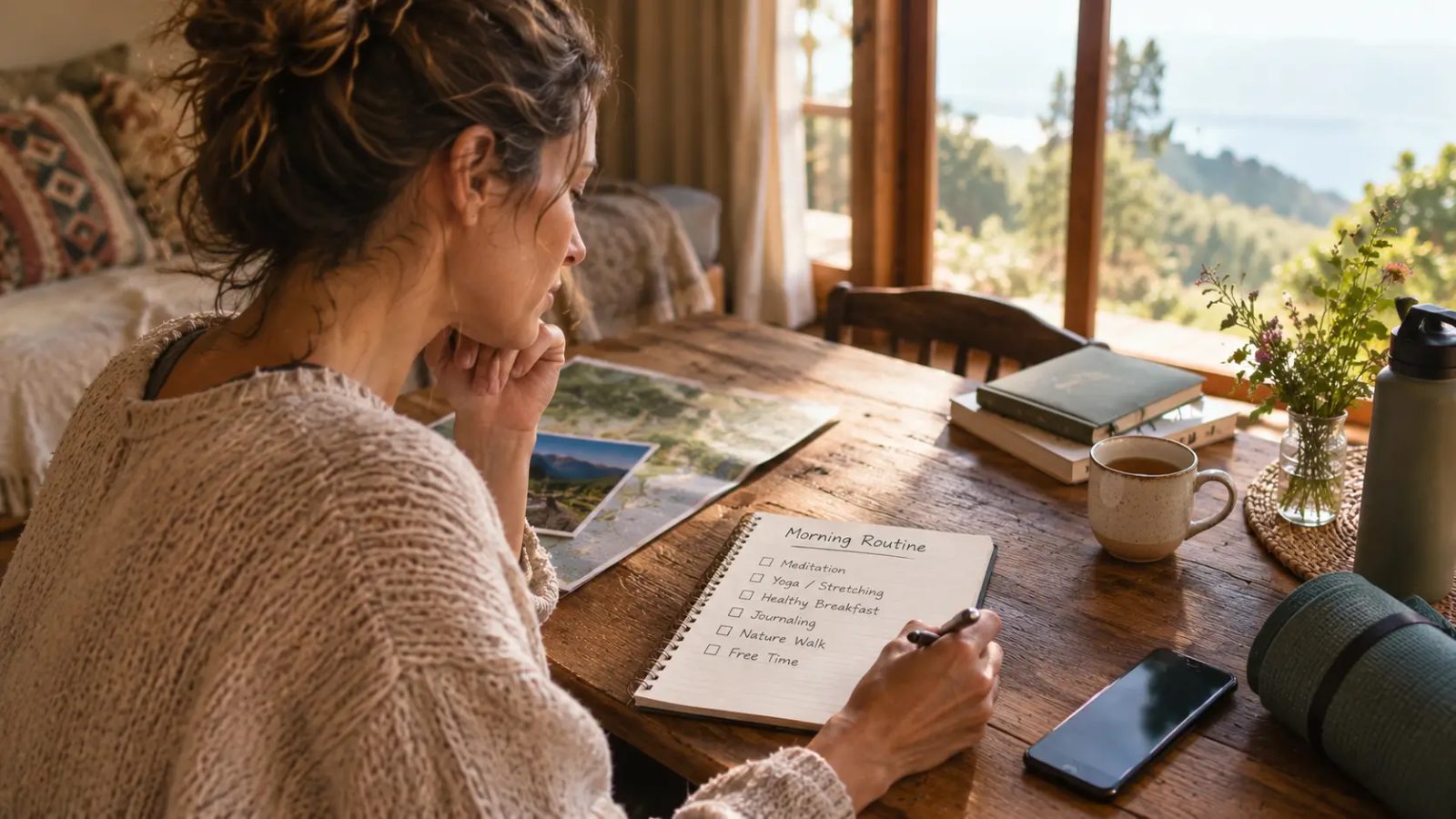
Keep the morning short and screen-free. A simple version:
Wake without an alarm if you can
Drink water or tea at a window or outside
Spend ten minutes sitting, stretching or walking
Eat breakfast before you look at your phone
Choose that day's three anchors
What Is a Good Solo Retreat Evening Routine for Better Sleep?
Protect your sleep, because it does a lot of the recovery. The CDC says adults aged 18 to 60 need at least 7 hours of sleep and recommends habits you can use on retreat:
Go to bed and get up at about the same time each day
Keep the room quiet, relaxing and cool
Turn off screens at least 30 minutes before bed
Avoid large meals and alcohol before bed
Avoid caffeine in the afternoon and evening
Add a warm shower, five lines in a journal and a paper book. If a racing nervous system and poor sleep are your main problem, browse our nervous system reset retreats.
What Should You Eat on a Solo Retreat?
Keep food simple so you don't spend your energy on it. Stock the kitchen before you arrive, eat at regular times and drink water through the day. Skip alcohol, since the CDC advises avoiding it before bed. Avoid large late meals, and don't start cooking projects. Plan one thing you'll enjoy, like a favorite tea or a good loaf of bread. If you're at a hosted retreat, meals are usually provided, so tell the host about any dietary needs before you arrive.
What If You'd Rather Not Plan Every Day Yourself?
A hosted retreat gives you the rhythm without the planning. The Butterfly Effect in North Bali is a 7-day women's retreat with 15 guests, most of whom arrive alone, led by a certified yoga teacher, from $2,220. Browse our solo reset retreats for more.
If what you're working through is grief, Medicine Maker Retreat in Colombia is the other recurring option, from $2,200. It's a plant medicine retreat with medical screening and 90 days of integration support, not a rest retreat, so read its page carefully first.
Frequently asked
How many hours of activities should I plan each day on a solo retreat?
About three hours at most, using three anchors: movement, reflection and time outdoors. Everything else, including meals and sleep, stays open. This feels like too little, but over-scheduling is a common reason solo retreats go wrong. Karmê Chöling notes that new retreatants often plan five or six hours of meditation a day. Add activities only if you truly want them.
What should I do on the first morning of a solo retreat?
Start slowly. Drink water or tea, sit outside or at a window for ten minutes, and keep your phone away until after breakfast. Add a short, gentle stretch if you feel like moving. Don't plan a long journaling session or any big decisions yet. If you arrived the day before, treat this morning as your real beginning and let it be quiet.
What should the middle day of a 3-day solo retreat look like?
It should be the slowest day. Keep your three anchors, a late breakfast, a morning movement session, a reflection block after lunch, and a sunset walk. Leave the afternoon completely open for a nap, a book or wandering. Boredom, heavy sleep and strong feelings often turn up on this day. Lighten the plan instead of filling the gaps.
What should I do on the last day before heading home?
Close the retreat deliberately. Pack the night before, keep the morning calm and write a short letter to yourself about what you noticed and what you want to keep. Choose one practice for home, take a last walk and travel in daylight. Keep the day after you return free of meetings, so the first day back doesn't erase what you've started.
Is it okay to do nothing on a solo retreat?
Yes. Doing nothing is a legitimate use of the time, especially if you're burned out. The anchors are a light framework, not a to-do list, and skipping one is fine. The only caution is that a day with no structure at all can drift into scrolling your phone. If that happens, one small anchor, like a short walk, usually brings you back.
Is it normal to sleep a lot on a solo retreat?
Often, yes. People who start resting after a long stretch of stress commonly sleep more than usual. The CDC recommends at least 7 hours for adults aged 18 to 60, so treat extra sleep in the first days as catching up. If you're still sleeping very long hours after several days, or you feel unwell, speak to a doctor.
What if I feel bored or restless on day two?
Boredom on day two is common, because you've stopped moving fast. Wait twenty minutes before reaching for your phone, change rooms or go outside, then pick one low-effort activity such as a walk, tea or a paper book. If it stays heavy, add one gentle activity. Don't fill the whole day, because that defeats the purpose of the retreat.
What if I feel emotional or start crying on a solo retreat?
Strong feelings can surface when you slow down, and crying is common. Let it pass, drink some water and don't schedule over it. A walk or a few lines in a journal can help. A retreat isn't treatment, so if the feelings become overwhelming, or you have thoughts of harming yourself, stop and contact a doctor or your local emergency or crisis service.
Should I follow the same schedule every day?
Keep the structure but vary the content. The same three anchors each day give you a steady rhythm, but you can change what they are. Walk on day one, stretch on day two, sit quietly on day three. Treat the schedule as a guide you can bend. If a day needs less, cut an anchor instead of forcing it.
What are good screen-free activities for a solo retreat?
Good options include walking without a destination, stretching or gentle yoga, journaling, reading a paper book, sketching or coloring, cooking a simple meal, taking a warm bath, and sitting outside with tea. Pick things that take little effort and need no phone. Put your phone in a drawer or another room, and check it at set times instead of constantly.