How to Plan Your First Solo Wellness Retreat: Costs, Steps and Safety
Planning a solo retreat is mostly a handful of practical decisions: what you want out of it, what it costs, who looks after things at home, and how you get back into normal life. Here is each one, with real prices.
To plan your first solo wellness retreat, decide what you want to leave with, choose between a hosted retreat that welcomes solo guests and a do-it-yourself stay, set a budget that counts food and transport, start with three to five days, and arrange time off and your return home before you book. For a first retreat, a hosted option removes the most planning, because the schedule, meals and often the transfers are already handled. The sections below cover each step, including what it costs.
How Do You Plan Your First Solo Wellness Retreat, Step by Step?
Do these in order. Each step narrows the next one.
Name the outcome. Write one sentence: "I want to leave with ___." Rest, clarity, a decision made, a habit started. Without this, every option looks equally good.
Pick the format. Hosted and solo-friendly, fully private, or do-it-yourself. The table further down helps you choose.
Set the full budget. Count the retreat, flights, transfers, food that isn't included, and a small cushion.
Choose three to five days. That's long enough to get past the first day or two of decompressing, and short enough to arrange around work.
Choose a destination you can reach easily. Fewer connections and a simple airport transfer matter more than a famous name.
Sort out time off and home cover. Do this before you pay a deposit, not after.
Plan your return. Block a quiet day after you get back and decide which one practice you'll keep.
How Much Does a Solo Wellness Retreat Cost?
A hosted solo-friendly retreat of about a week, with sessions included, starts around $2,200. The two recurring options on Verified Retreats are The Butterfly Effect in Bali, from $2,220 for 7 days, and Medicine Maker Retreat in Colombia, from $2,200. Flights are usually extra.
For context, Global Wellness Institute data puts the average international wellness trip at $1,764 in 2022, about 41% above a typical international tourist. That average covers every kind of wellness trip, including short spa breaks, so a full week with a facilitator and a program naturally costs more.
Retreat | Length | Group size | Price |
|---|---|---|---|
The Butterfly Effect, North Bali | 7 days | 15 women, most arriving alone | from $2,220 |
Medicine Maker Retreat, Putumayo, Colombia | About a week | 7 to 12 guests | from $2,200 |
That works out to roughly $315 a day for a facilitated week. The Bali price includes accommodation, meals, daily yoga, a welcome ceremony and excursions. The Colombia retreat includes medical screening and 90 days of integration support after you return. Compare what is in the price, not just the total.
What a do-it-yourself retreat costs. There is no standard figure, because it depends on where you stay. Price your own version like this:
Lodging: nightly rate multiplied by the number of nights
Food: what you'll spend per day on groceries or meals, multiplied by days
Travel: transport to and from, plus local transfers
Extras: a class, a massage, a guided session
Cushion: a small amount for the unexpected
Work this out with local rates before you decide a DIY retreat is cheaper.
How Do You Plan a Solo Wellness Retreat on a Budget?
Shorten it before you downgrade it. Three well-chosen days usually beat five poor ones. Beyond that:
Fix your dates first, then price flights. Flexible dates often lower the flight cost.
Check flights before you fall for a place. The flight can outweigh the stay.
Go off-peak. Mid-season dates cost less and tend to be quieter.
Read what's included. Meals, transfers and sessions that are billed separately change the real price.
Should Your First Solo Retreat Be Hosted, Private, or DIY?
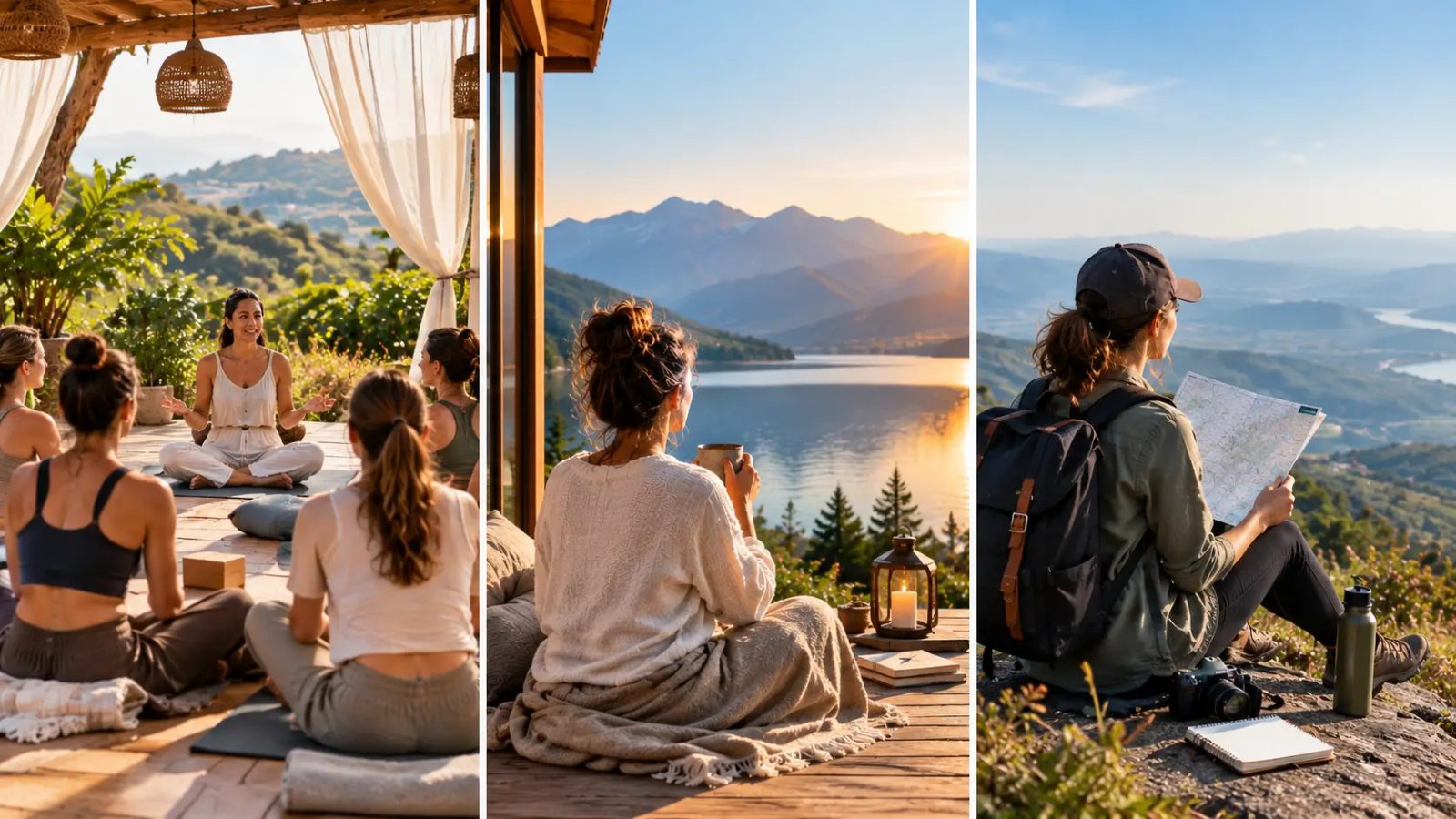
For most first-timers, a hosted retreat that welcomes solo guests is the easiest start. You get a schedule, a group, and someone responsible if something goes wrong. A fully private or DIY stay gives more freedom, but you make every decision yourself, and that can be tiring if you're already depleted.
Hosted, solo-friendly | Fully private | DIY | |
|---|---|---|---|
Structure | Set daily rhythm, optional sessions | You and the host agree it | You build it |
Decisions | Few | Some | All of them |
Company | A small group, most arriving alone | None unless you choose | None |
Best for | First retreats, burnout, nervous first-timers | People who find groups draining | People who know what restores them |
Solo-friendly is not the same as fully solo. At The Butterfly Effect, fifteen women attend and most arrive alone. Browse the solo reset category for more as they are verified.
Which Solo-Friendly Retreats Are Open Right Now?
Two retreats are currently recurring on Verified Retreats. They are built for different needs, so choose by what you want to work on, not by the destination.
The Butterfly Effect, North Bali, Indonesia. A 7-day women's retreat for burnout recovery and life transitions, with daily yoga, breathwork, ceremony and sisterhood circles. Fifteen women attend, most arrive alone, and no yoga experience is needed. It is led by Desiree B., a certified 200-hour yoga teacher and Reiki practitioner. From $2,220. This is the easier first retreat of the two.
Medicine Maker Retreat, Putumayo, Colombia. A small retreat built around grief and plant medicine work, led by a Camsá healer with a team that includes an integration guide. Groups are 7 to 12 guests, and 90 days of integration support follow the retreat. From $2,200. This is not a general rest retreat, so it suits a first retreat only if grief work is exactly what you are after.
Planning this one takes longer. Every guest goes through medical screening before acceptance. Anyone taking SSRIs or SNRIs is asked to taper off, usually 4 to 6 weeks beforehand, under a doctor's supervision. Never stop or change medication on your own. Preparation support also starts 45 days before the retreat, so allow several months from first inquiry to arrival.
Dates change, so check the current ones on each page before you plan leave or flights.
How Do You Choose a Destination for Your First Solo Retreat?
Pick by how easy it is to arrive, not by how good it looks online. Check these in order:
Flight time and connections. Every extra connection adds fatigue before you've started.
The transfer. Is there a pre-arranged pickup, or will you be finding a taxi in the dark?
Time zone. A large shift eats into a short stay.
Season and weather. Rainy-season or extreme-heat dates change what you can do outside.
Language. Easier if you're already running low.
How Far in Advance Should You Book a Solo Retreat?
Many hosts fill their places 6 to 10 weeks before the start date, and spring and early autumn fill earlier. If a retreat is small, like fifteen guests, there is less room for late bookings. Book as soon as the dates, price and host are settled, and read the cancellation terms before you pay. Allow longer for any retreat that screens guests medically, since screening and any medication taper have to be finished before you travel.
How Do You Ask Your Boss for Time Off for a Wellness Retreat?
Ask for it as planned leave, not as a favor. Keep it short, give the dates, and say how work will be covered:
"I'd like to take leave from [date] to [date]. I'll hand over [tasks] to [person] before I go, and I'm happy to go through it with you beforehand."
You don't need to give details beyond the dates. If your burnout is affecting your health, speak to your doctor first, because medical leave rules differ by country. Some employers also contribute from a wellbeing or development budget, so it costs nothing to ask.
How Do You Take a Solo Retreat When You Have Kids?
Arrange the care before you book anything, and treat it as scheduled maintenance, not an indulgence. A few things make it easier:
Start with two or three nights, and stay within a few hours of home
Trade care with a partner or friend, so it feels fair both ways
Write down the routines, so nobody has to message you
Tell your family the dates and when you'll be reachable, and stick to it
If guilt shows up, it's common. It doesn't mean the plan is wrong. Notice it, and keep the dates.
What Should You Do on the First Night of a Solo Retreat?
Keep it small. Arrive in daylight if you can, unpack, eat something, and put your phone away at a set time. Don't make big decisions or start journaling for hours. Early nights are normal, and so is feeling strange or flat on day one. Most people spend that first day just coming down from travel.
What If You Get Lonely on a Solo Retreat?
It can happen, and it depends on whether the time alone is your choice. A University of Reading study of 178 adults over 21 days found that time alone was linked to less stress and a greater sense of autonomy, but the benefit held when the solitude was chosen, not when it was imposed.
Build one social anchor into the stay: a shared meal, a group session, or a daily check-in with a friend. This is also why a hosted, solo-friendly retreat is gentler for a first time than a fully private one.
How Do You Set an Intention for a Solo Retreat?
Keep it to one sentence you can remember. Good ones are concrete: "I want to sleep properly for three nights" or "I want to decide about the job." If you're stuck, use one of these prompts on the first morning:
What am I most tired of carrying?
What would I do this week if nobody needed anything from me?
What am I avoiding deciding?
What do I miss about how I used to feel?
What is one thing I want to keep doing when I get home?
How Do You Stay Safe on a Solo Wellness Retreat as a Woman?
Most of it comes down to arrival and information:
Arrange the transfer in advance through the host, and arrive in daylight
Share the address, dates and host contact with one person, and agree when you'll check in
Ask who is on site overnight, and confirm the room locks
Check the host before paying: named facilitators, clear refund terms, reviews from somewhere independent
Our guides on whether women-only retreats are safe and how to spot a fake retreat go further.
How Do You Plan Your Return and Keep the Benefits?
Plan it before you leave. Research on habit formation led by Dr. Phillippa Lally at University College London found that new behaviors took anywhere from 18 to 254 days to become automatic, and that a stable setting mattered more than willpower, as described in this University of Surrey interview. Your old environment is waiting when you get home.
Keep the day after you return free of meetings
Choose one practice to keep, not five
Put a debrief with yourself in the calendar for the following week
Our guide to extending the benefits of your retreat covers this in more detail, and our burnout recovery retreats guide explains why recovery takes longer than a week.
Frequently asked
How much does a solo wellness retreat cost?
A hosted solo-friendly retreat of about a week starts around $2,200. The Butterfly Effect in Bali is from $2,220 for 7 days, and Medicine Maker Retreat in Colombia is from $2,200. Flights are usually extra. For context, the Global Wellness Institute puts the average international wellness trip at $1,764, about 41% above a typical tourist trip. Always check what is included in the price.
How far in advance should I book a solo retreat?
Many hosts fill their places 6 to 10 weeks ahead, and spring and early autumn go earlier. Small retreats of around fifteen guests have little room for late bookings. Once your dates, budget and host are settled, book and read the cancellation terms before paying. Retreats with medical screening, like the Colombia one, need several months because of screening and any medication taper. Booking early also gives you time to arrange leave and cover at home.
Is it cheaper to plan your own solo retreat or book one?
A DIY retreat can cost less in cash, but you pay in time and decisions, and the total depends on where you stay. A hosted retreat bundles meals, sessions and often transfers, so compare the full bill, no
What if I get lonely on a solo retreat?
It's possible, and it depends on whether you chose the time alone. A University of Reading study found that chosen solitude was linked to less stress, but imposed solitude did not carry the same benefit. Build in one social anchor, such as a shared meal or group session. A hosted, solo-friendly retreat, like The Butterfly Effect where most guests arrive alone, makes this easier.
How do I stay safe on a solo wellness retreat as a woman?
Arrange your transfer in advance and arrive in daylight. Share the address, dates and host contact with one person and agree on check-in times. Ask who is on site overnight and confirm your room locks. Before paying, check that the host names its facilitators and gives clear refund terms.