Best Wellness Retreats for Burnout Recovery in 2026: How to Actually Choose
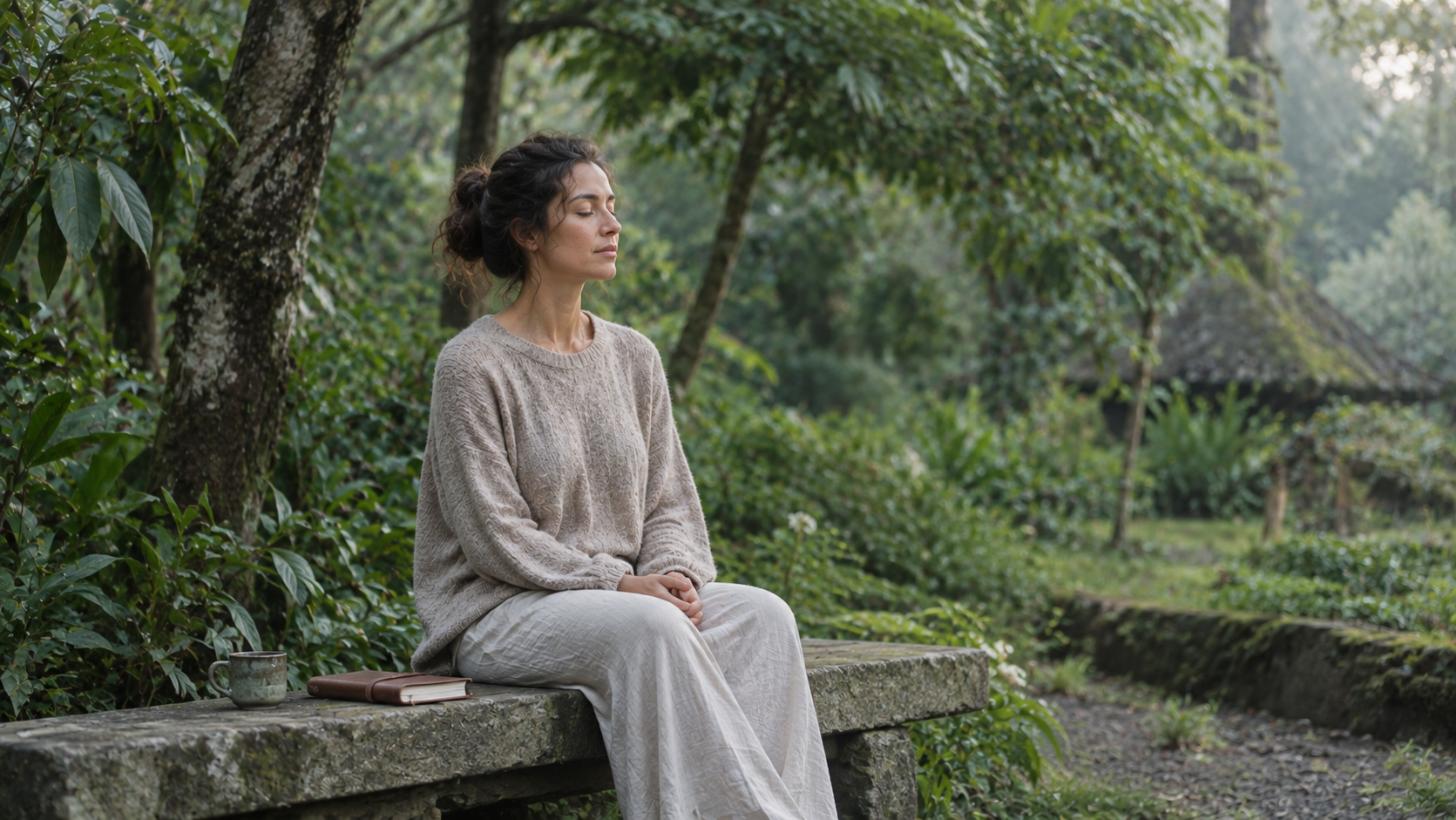
Not every wellness retreat is built for burnout, some are packed with activity when what you actually need is less. Here's the real research on what helps, how to choose the right type, and what's currently open and verified.
Burnout rarely feels dramatic at first. It often starts as a steady flattening of energy, patience, focus, and motivation. You may still be functioning, still answering messages, still showing up, but it gets harder to recover between responsibilities.
That's one reason wellness retreats for burnout have become a serious category rather than a luxury extra. The World Health Organization classifies burnout as an occupational phenomenon tied to chronic workplace stress that hasn't been managed well, with patterns that include energy depletion, mental distance from work, and reduced professional efficacy.
There's also a practical reason to shop carefully. Not every wellness retreat is built for burnout recovery. Some are energizing, social, and packed with activities, which can feel great for certain travelers but exhausting for someone who already feels maxed out.
What Should You Actually Look for in a Burnout Recovery Retreat?
The best burnout retreats usually do less, not more. They create space for the nervous system to settle, reduce decision fatigue, and replace performance with recovery. That can mean gentle movement, mindfulness, nourishing meals, sleep-friendly schedules, and real downtime between sessions.
Research backs this specific approach. A 2024 systematic review published in Frontiers in Public Health analyzed 49 randomized controlled trials and found more than two-thirds (67%) showed a significant beneficial effect on burnout indicators, with emotional exhaustion showing the strongest improvement. If your burnout feels like deep tiredness mixed with detachment, that's directly relevant.
When comparing retreat options, focus less on glossy branding and more on structure:
Quiet accommodations
Time offline
Gentle yoga or mobility
Mindfulness or meditation
Nature access
Small group format
A few practical markers often separate a strong burnout retreat from a generic wellness getaway:
Daily schedule: enough open time to rest and reflect, not managed every hour
Facilitation style: leaders with clear credentials and realistic promises
Emotional tone: supportive and calm, not hyper-social or performance-driven
Post-retreat value: tools you can actually bring back into work and home life
What's the Best Type of Wellness Retreat for Your Specific Burnout?
Burnout doesn't look the same for everyone, so the best retreat depends on what's actually depleted. Some women need sleep and silence. Others need emotional processing, coaching, or distance from caregiving roles.
Retreat Type | Best For | Common Elements | Watch For |
|---|---|---|---|
Mindfulness and meditation | Mental overload, racing thoughts | Guided meditation, breathwork, silence, journaling | Can feel too austere if you need more support |
Restorative yoga | Physical tension, poor sleep | Restorative yoga, nidra, stretching, massage | Schedules with too many active classes |
Nature-based | Digital fatigue, disconnection | Walks, slow mornings, outdoor reflection | Adventure-heavy itineraries that feel demanding |
Spa and recovery | Exhaustion, craving comfort | Hydrotherapy, massage, quiet time | Luxury focus without emotional support |
Coaching and reset | Career burnout, identity strain | Small-group coaching, boundaries work | Can feel too "productive" when you need rest first |
Creative healing | Emotional numbness, grief overlap | Art, writing, ritual, group sharing | Limited downtime between sessions |
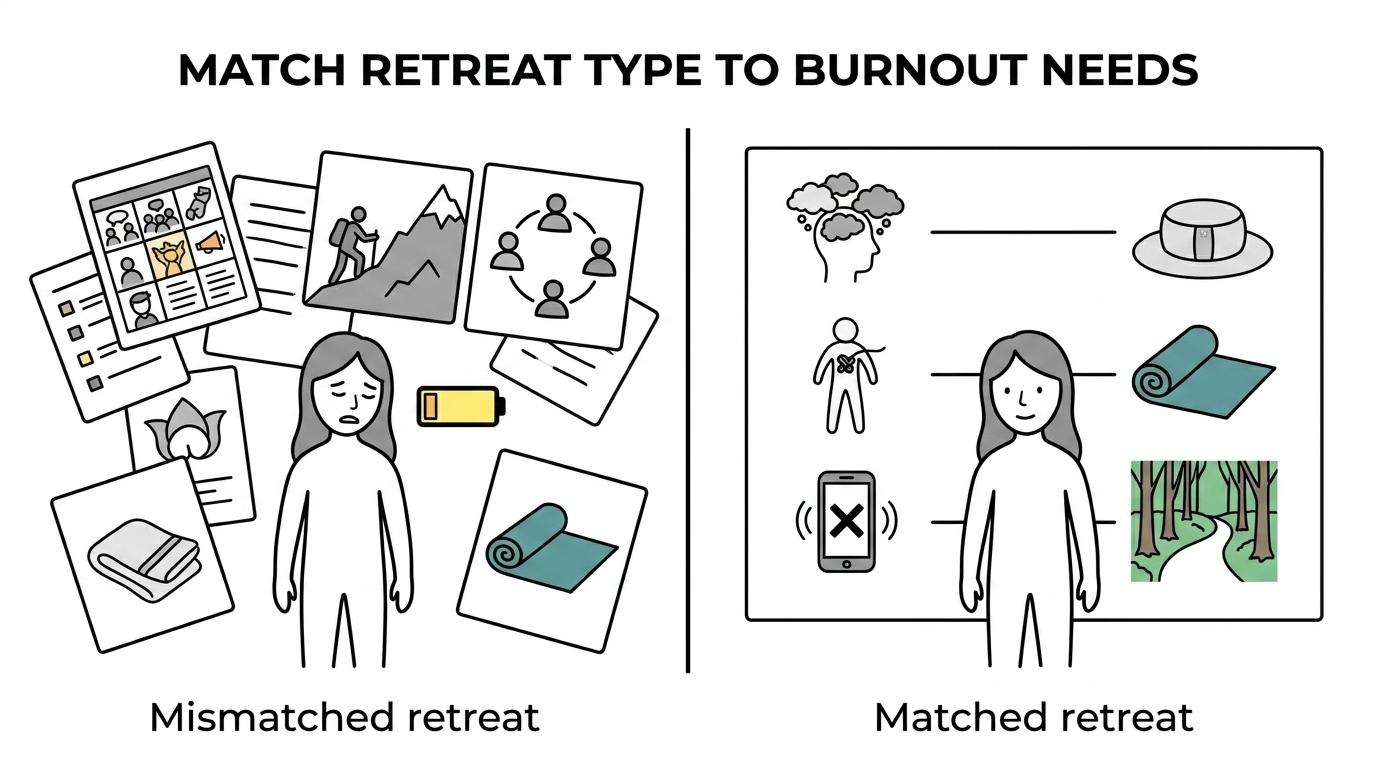
For many travelers, the strongest option isn't the most intense retreat. It's the one that matches the stage of burnout you're actually in. If you're still in acute depletion, a quiet retreat with rest and gentle movement will likely serve you better than a transformative bootcamp.
What's Actually Open and Verified Right Now?
The Butterfly Effect, North Bali, Indonesia Tagged specifically for burnout recovery, life transitions, and self-empowerment. Combines daily yoga, breathwork, sacred ceremony, and sisterhood circles. Dates: May 17-23, 2027 · Price: from $2,220 Book this retreat →
If your burnout is tangled up with grief or a bigger life transition rather than workplace exhaustion specifically, Medicine Maker Retreat in Putumayo, Colombia is the other currently open, verified option, built around grief and plant medicine work.
Browse by need, as more retreats are verified and added: Burnout · Solo reset · Executive reset · Nervous system reset · Life transition
Why Does Burnout Hit Women Especially Hard?
Women often carry paid work, emotional labor, caregiving, and social expectations simultaneously. Gallup's 2026 workplace data found 31% of women report feeling burned out "very often or always," compared to 23% of men, and the gap widens further in leadership roles, 29% of women versus 19% of men.
That pattern helps explain why many women specifically seek retreat spaces that feel safe, well-vetted, and designed around their actual realities, not a generic wellness getaway.
A women-only retreat setting can change the feel of recovery, reducing self-consciousness and creating faster trust in group conversations about work stress, caregiving load, and boundaries. That doesn't make every women-only retreat the right fit though, verification still matters more than the label alone.
Sometimes the most restorative step is letting someone narrow the options for you.
How Long Should a Burnout Recovery Retreat Actually Be?
Short retreats can work well, especially if your schedule is tight or you're testing whether retreat travel feels supportive. A three- or four-day retreat can create a meaningful pause and improve sleep. It may be enough if your main goal is to rest and regain clarity.
Five to seven days is often the sweet spot. It gives you time to arrive, let stress hormones settle, and actually absorb the retreat's rhythm, the first two days are often spent unwinding from travel and overstimulation, with deeper restoration usually becoming possible after that.
Longer retreats can be powerful, but only if they match your capacity. If you're severely depleted, a one-week retreat with a gentle schedule may be more realistic than a two-week experience demanding lots of emotional processing.
How Do You Know a Burnout Retreat Is a Strong Fit Before You Book?
A retreat can look beautiful and still be a poor match if the pace, tone, or group style is off. Use these signals before committing:
The language feels grounded: no miracle claims, no pressure to become a new person in a week
The program protects downtime: breaks, quiet mornings, and free afternoons are visible in the schedule
The body is included: sleep, food, movement, and rest are treated as central, not extras
The group size seems manageable: smaller groups feel more restorative, less socially draining
The return home is considered: journaling prompts, integration sessions, or follow-up support are offered
If a retreat looks exciting but also exhausting, trust that reaction.
Signs a burnout retreat is a strong fit before you book
The booking stage is where burnout shoppers often get stuck. A retreat can look beautiful and still be a poor match if the pace, tone, or group style is off. Read the itinerary closely. Look at how much empty space is built into each day. Notice whether “optional” really means optional.
It also helps to pay attention to what the retreat is promising. Burnout recovery is rarely about a dramatic breakthrough. More often, it is about feeling safe enough to rest, think clearly again, and leave with habits that support better boundaries at home and work.
Use these signals before committing:
The language feels grounded: no miracle claims, no pressure to become a new person in a week
The program protects downtime: breaks, quiet mornings, and free afternoons are visible in the schedule
The body is included: sleep, food, movement, and rest are treated as central, not extras
The group size seems manageable: smaller groups can feel more restorative and less socially draining
The return home is considered: journaling prompts, integration sessions, or simple follow-up support are offered
If a retreat looks exciting but also exhausting, trust that reaction.
When a wellness retreat is not the right next step for burnout
A retreat can be helpful, but it is not a substitute for medical care, crisis support, or treatment for severe depression, trauma, or anxiety disorders. Since the WHO describes burnout as an occupational phenomenon rather than a medical condition, many women find that retreat support fits well alongside practical workplace changes and personal recovery habits. Still, that does not cover every situation.
If you are dealing with persistent hopelessness, panic, inability to function day to day, or symptoms that feel bigger than work stress alone, start with a licensed clinician.
As psychotherapist Lars Nielsen notes, distinguishing stress from depression is central, because low mood, sleep disruption and loss of drive can overlap yet call for different next steps. A retreat may still be supportive later, but it should not carry the full burden of care.
That distinction is not discouraging. It is protective.
How to choose and book a burnout retreat with less friction
Start with three filters: your energy level, your ideal travel distance, and the kind of support you want most. If you are deeply fatigued, choose low-travel-stress options and a quiet schedule. If your burnout is tied to career confusion, add coaching or reflection-based programs. If your body feels as burned out as your mind, prioritize sleep, nourishing meals, and restorative practices.
Then narrow by budget and duration. A nearby four-day retreat may help more than an aspirational international trip that leaves you stressed about flights, timing, and cost. The right retreat is the one you can actually take, not just the one you admire on a screen.
For women who want a trusted place to compare options, browse the curated listings at Verified Retreats. If you would rather skip the research spiral and get matched to a suitable option, use the concierge service. A verified, women-focused shortlist can make burnout recovery feel less like another task and more like the beginning of real relief.
Frequently asked
How do I know if a wellness retreat is actually built for burnout, not just general relaxation?
Look for a protected daily schedule with real downtime, not back-to-back activities, small group sizes, and language that avoids miracle claims. A retreat that treats sleep, food, and rest as central rather than optional extras is usually the better sign.
How long should a burnout recovery retreat be?
Three to four days can create a meaningful pause if your schedule is tight. Five to seven days is typically the sweet spot, giving enough time to unwind from travel before deeper restoration becomes possible.
Is a wellness retreat enough to actually treat burnout?
It can meaningfully help, but a retreat isn't a substitute for medical or psychiatric care. If symptoms feel bigger than work stress alone, hopelessness, panic, or an inability to function day to day, start with a licensed clinician rather than a retreat.
Why do women experience higher rates of burnout than men?
Gallup's 2026 data found 31% of women report frequent burnout compared to 23% of men, a gap that widens in leadership roles. Women often carry paid work, emotional labor, and caregiving simultaneously, which helps explain the disparity.
What's currently the best verified retreat for burnout recovery?
The Butterfly Effect in North Bali, Indonesia is currently the clearest match, tagged specifically for burnout recovery and life transitions through yoga, breathwork, and sisterhood circles.