10 Women Only Retreats for Safe and Supportive Travel
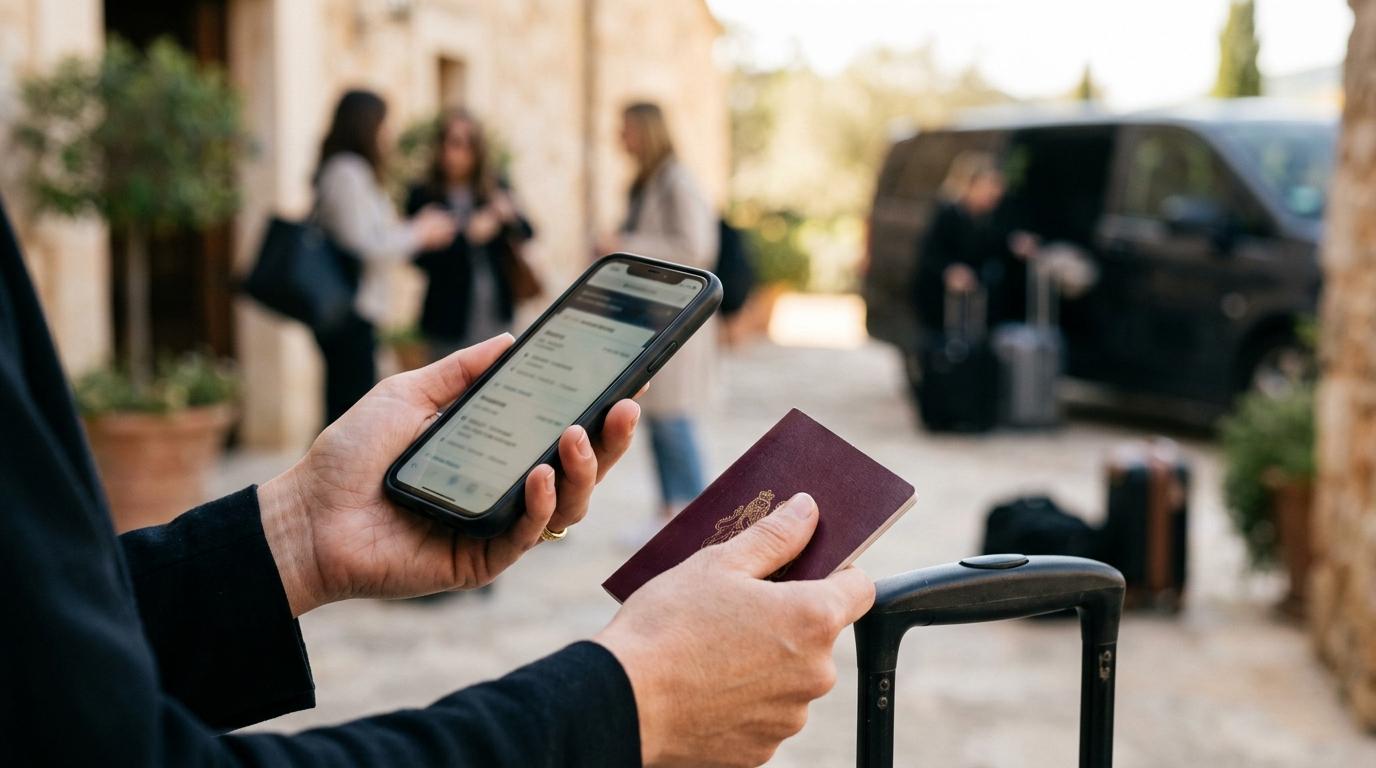
Women-only retreats are no longer a niche corner of wellness travel. For many travelers, they are a practical way to combine rest, community, and a stronger sense of safety while away from home.
TL;DR: Summary
- Women-only retreats are often a strong choice for safe and supportive travel because they combine shared identity, structured group connection, and clearer screening of hosts, accommodations, and retreat leadership.
- The safety need is grounded in real evidence. UN Women says sexual harassment and sexual violence in public spaces are an everyday occurrence for women and girls worldwide, and WHO treats violence against women and girls as both a human rights issue and a public health problem.
- They are especially useful for solo travelers. Booking.com’s solo-travel research found 72% of American women surveyed had embraced solo travel, 59% planned to travel solo again within 12 months, and 56% said social channels boosted safety and confidence.
- The best women-only retreats are not just women-only on paper. Look for verified customer reviews, leader interviews, practitioner credentials, clear rooming and transport details, and ongoing monitoring after listing.
- If you are booking your first retreat, choose a small-group format with airport transfer guidance, a published itinerary, clear community norms, and responsive pre-trip communication.
- A good place to start is a curated platform focused on women’s wellness retreats, then narrow by retreat type, destination, group size, and support level. You can browse options at Verified Retreats or ask for tailored help through the concierge service.
That matters because the safety question is real, not imagined. UN Women and WHO both describe persistent risks around harassment and violence for women in public and travel-adjacent spaces, while Booking.com’s solo-travel research shows many women already travel alone and value tools that increase confidence and perceived safety.
Why are women-only retreats popular right now?
Yes. UN Women, WHO, and Booking.com all point to the same market reality: women want travel, but many also want more control, more social support, and fewer avoidable risks.
Women-only retreats sit at the intersection of wellness travel and confidence-building travel. They give solo travelers a pre-formed social setting, and they give groups a clearer shared context for conversation, movement, recovery, and rest. That matters if someone is booking after burnout, divorce, caregiving strain, grief, or a major life transition.
There is also a practical reason for the growth. If public-space risk changes how women think about transportation, lodging, and new environments, then a retreat with vetted leadership, a known schedule, and a built-in peer group solves more than one problem at once.
What makes a women-only retreat feel safe and supportive?
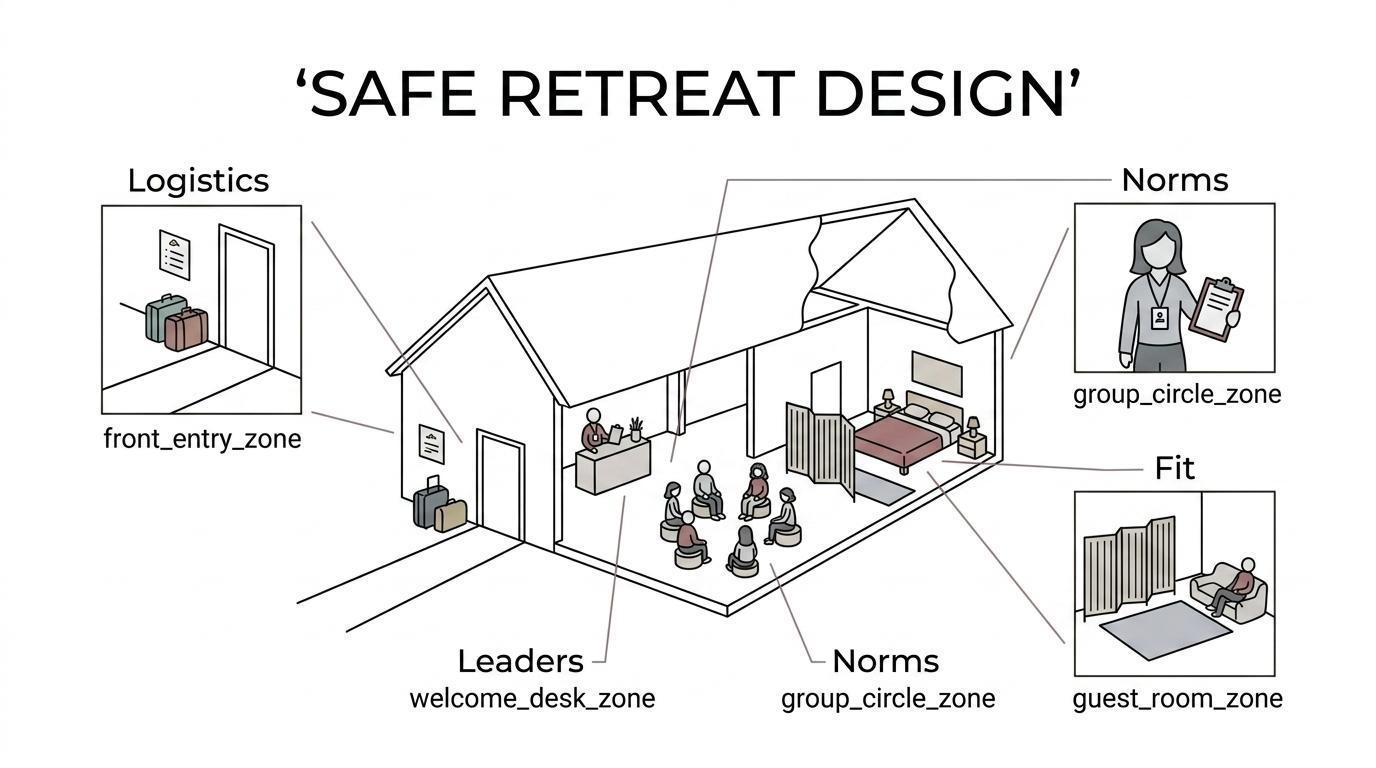
A strong women-only retreat usually combines clear logistics, vetted leaders, and group norms. Verified Retreats and similar curated models matter because “women-only” alone does not guarantee quality or safety.
A safe retreat experience is usually designed, not assumed. The best operators reduce uncertainty before arrival by sharing transport instructions, accommodation details, room configurations, staff bios, emergency contacts, and realistic expectations about the emotional tone of the trip. Common misconception: a remote luxury property is not automatically safer than an accessible one with strong operating procedures.
"Verified Retreats checks reviews, credentials, and experience, then gets on a call with every retreat leader before listing."
Useful screening criteria include:
- Physical safety: arrival logistics, room security, local transport clarity, emergency procedures
- Social safety: respectful group norms, consent-aware facilitation, optional participation
- Operational safety: verified customer reviews, practitioner credentials, responsive communication
- Emotional fit: group size, retreat pace, activity intensity, privacy versus bonding time
If a retreat cannot explain who leads it, how guests arrive, or what support exists during the stay, that is a real signal, not a minor omission.
What are 10 women-only retreat options worth considering?
The best women-only retreat options depend on your goal. Verified Retreats is a useful starting point, then you can filter by modality, destination, and support level.
If you are choosing among formats, these are the most practical options for safe and supportive travel:
- Verified Retreats curated women-only retreat collection: a strong first filter if you want women-focused listings that have been checked for quality and leadership fit.
- Small-group yoga retreats: good for first-time retreat travelers who want routine, gentle social structure, and a familiar practice.
- Nature and hiking retreats: best for women who want confidence-building through movement, daylight activity, and shared challenge.
- Burnout recovery retreats: useful when rest, nervous system regulation, and low-pressure scheduling matter more than adventure.
- Surf or active adventure retreats: a good fit if you want skill-building with a group instead of isolated solo exploration.
- Luxury spa retreats: best when comfort, privacy, and onsite services are your top priorities.
- Creative retreats: strong for women who want reflection without the intensity of a heavily therapeutic setting.
- Leadership or career reset retreats: ideal when networking, structured workshops, and personal strategy matter.
- Midlife or menopause retreats: helpful when you want age-relevant conversations and practitioners familiar with hormonal change.
- Spiritual or meditation retreats: strongest when you want quiet, ritual, and a slower social pace.
The right category depends on what you need most: recovery, friendship, challenge, privacy, skill-building, or reflection.
How do women-only retreats compare with co-ed wellness retreats?
Women-only retreats usually offer more psychological ease, while co-ed retreats usually offer a wider social mix. Neither format is automatically better.
If your main goal is relaxation, candid conversation, or rebuilding confidence as a solo traveler, women-only often works better because there is less social self-monitoring. Many guests report that conversations become more direct, practical, and emotionally honest in single-gender groups.
If your main goal is a specific teacher, athletic modality, or mixed social energy, a co-ed retreat may be a better match. The trade-off is that group dynamics can become less predictable, especially if the retreat operator has weak facilitation. Pro tip: do not choose by format alone. Choose by format plus leader quality plus group structure.
How do you choose the right women-only retreat step by step?
Start with your real objective. A Costa Rica yoga retreat and a desert hiking retreat can both be excellent, but they solve different problems.
Step 1: decide the job the retreat needs to do. If you need nervous system recovery, choose lower stimulation, fewer transfers, and more downtime. If you want renewed confidence, choose skill-based activities and a clear group schedule.
Step 2: set your non-negotiables. That usually means budget, destination flight time, room preference, dietary needs, activity level, and group size. If you are new to solo travel, prioritize airport transfer guidance and pre-trip communication over aspirational scenery.
Step 3: screen for proof. Look for verified reviews, leader bios, facilitation style, and direct answers to practical questions. Pretty photography is helpful, but operating clarity is more valuable.
"Verified Retreats says every listed retreat is verified, and approval is not permanent because ongoing monitoring continues after listing."
A curated platform can cut decision fatigue because it narrows the field before you start comparing.
How do you vet a retreat host before you book?
You should vet the host as carefully as the destination. Retreat leadership quality often predicts the whole experience more accurately than the property itself.
Start with credentials and role clarity. If yoga, breathwork, coaching, somatic work, or trauma-informed practice is part of the program, check whether the practitioners are named and whether relevant training is disclosed. A good operator does not hide behind vague language like “expert facilitators.”
Next, test responsiveness. Ask direct questions about rooming, safety, transfers, cancellation terms, free time, and group composition. If answers are slow, defensive, or slippery before payment, they rarely improve after booking.
Last, check whether the retreat is monitored after listing or review publication. That matters because a retreat can start strong and later drift in staffing, quality, or guest experience. Common misconception: one glowing testimonial is enough. It is not. You want patterns, not highlights.
Are women-only retreats good for solo travelers?
Yes. For many women, they are one of the easiest ways to try solo travel without feeling isolated.
Booking.com’s solo-travel research reported that 72% of American women surveyed had embraced solo travel, 59% of female solo-travel enthusiasts planned to travel solo again within 12 months, and 56% said social channels boosted safety and confidence. A retreat adds another layer beyond digital confidence: built-in community at the destination.
That built-in structure matters on day one. You do not need to invent your own itinerary, search for safe public spaces alone, or negotiate every meal and transfer independently. If you like independence but dislike uncertainty, this format often lands in the sweet spot between solo and supported.
Which destinations work best for women-only retreats?
The best destinations are usually the ones that reduce friction, not just the ones that look impressive online. Portugal, Costa Rica, and Bali are common examples because they combine established wellness infrastructure with strong retreat demand.
For a first retreat, choose a place with straightforward airport access, stable transport options, and a retreat property that handles arrivals clearly. If the destination requires multiple transfers, late-night arrivals, or hard-to-verify local logistics, the retreat should offset that with excellent communication.
A common mistake is focusing only on the country. The retreat setup often matters more than the map pin. A well-run countryside retreat near a major airport can feel easier and safer than a glamorous but fragmented itinerary spread across several towns.
How do hosted women-only retreats compare with planning your own wellness trip?
Hosted retreats usually offer more structure and support, while self-planned trips offer more freedom and sometimes lower cost. The right choice depends on what you are trying to solve.
If you want transformation, accountability, and faster connection, a retreat often wins. You arrive with a schedule, a host, and a group, which reduces planning load and decision fatigue. That is useful when your mental bandwidth is already low.
If you mainly want a beautiful hotel, private downtime, and total flexibility, a self-planned trip can be better. The trade-off is that you carry all the planning, safety checks, and social uncertainty yourself. If you are craving rest but not complexity, paying for structure can be rational, not indulgent.
How should you prepare for solo arrival at a women-only retreat?
You should prepare like a confident traveler, not a nervous one. Preparation lowers uncertainty and makes the first 24 hours much easier.
First, confirm the boring details early: arrival window, transfer instructions, local SIM or roaming, payment methods, and the exact property contact. If the retreat has a group chat or pre-arrival email thread, join it. That single step often changes how supported the trip feels.
Second, pack for the retreat you booked, not the fantasy version of it. If the schedule includes yoga, walking, workshops, and downtime, bring layers, one or two reliable outfits, and anything that helps you regulate, like a journal, eye mask, or medication plan. Pro tip: avoid overpacking formal or social outfits for retreats built around ease.
"Verified Retreats curates and verifies women-only wellness retreats, giving travelers a focused starting point instead of an open marketplace."
Third, decide in advance how social you want to be on day one. You do not need to perform instant friendship. A simple arrival plan, check in, settle, attend the welcome session, and speak to two people, is enough.
Where can you browse verified women-only retreats?
A curated women-focused platform is the fastest place to start. Verified Retreats is designed specifically for women’s wellness travel, which makes the search process more focused than a general marketplace.
If you want to compare actual options, browse the current collection at Verified Retreats retreats. If you want help narrowing by destination, retreat type, or comfort level, use the concierge service. That route is especially useful if you are booking your first solo retreat, traveling after a major life transition, or unsure whether you need yoga, adventure, recovery, or a more private luxury format.
A practical way to use the platform is:
- Browse retreats: start with women-only listings and filter by destination, style, and support level
- Use concierge: ask for help if you want a shorter shortlist instead of comparing dozens of options
- Ask before booking: confirm arrival logistics, room setup, activity intensity, and cancellation terms
That approach keeps the inspiration part of retreat planning while removing a lot of the noise.